Physics

In Physics, the ‘game’ is life, the universe and everything and most of the rules are more obvious. The theoretician tried to find a rule that describes what he sees. The experimentalist tries to devise an experiment to check the theory. When it all seems to work, a ‘rule’ is written and called a Law. Once we know the laws, we ought to be able to predict what will happen in different circumstances.
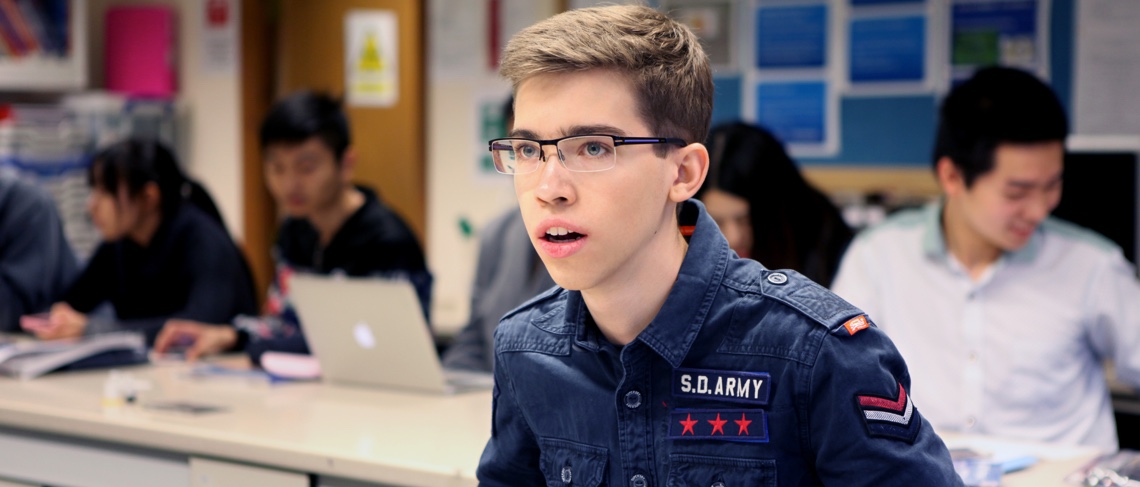
At A-Level we build on the basic work carried out at GCSE and progress by asking questions rather than taking as read what we are told. Our minds develop and we can confront bigger problems. You’ll not only learn to appreciate the need for complex apparatus for the further studies, but perhaps you’ll even be able to suggest what they might be.

How Physics is taught at Hurtwood

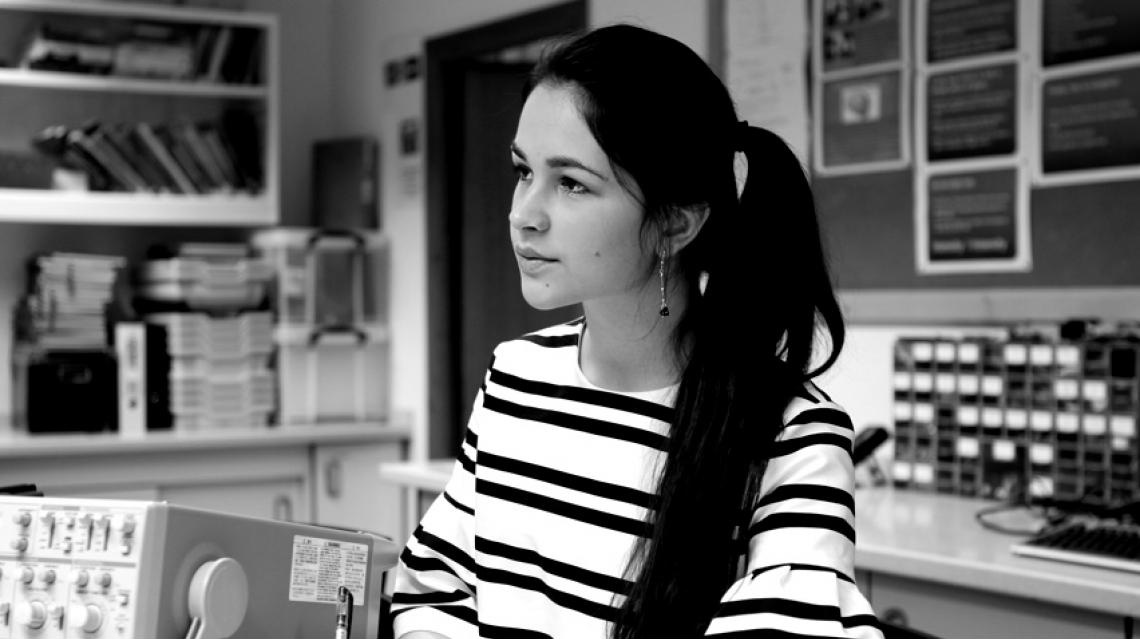
Physics is a ‘hands-on’ science. Experiments underpin everything we learn – indeed the experiment drives the theory. It is by experimenting that we build a theory and the inevitable equations (they are just a shorthand notation for theory anyway). We are not given an equation and expect an experiment to follow it. The equation is the result of the experiment. Grasp that, and you are on your way to understanding what science is about.
 
The Physics department at Hurtwood is committed to providing a challenging, thought-provoking and enjoyable way to get the very best from its students. Apart from the well-equipped laboratory and weekly practical sessions there are opportunities to see other Physicists in action – by inviting them to speak to us or going to see them. There are visits to power stations, museums and even to a theme park – where getting the physics right really matters!!!
 
We are also currently involved in some research and development work in which we are attempting to increase the energy-efficiency of a piece of life-saving hospital equipment. If that doesn’t attract you, what about the annual bridge-building competition? This year the bridge had to span a 1.2m gap and bear the weight of the Physics teacher!

AS and A-level in Physics

AS
AS is short for Advanced Subsidiary. This is the first half of the A-level course. It is a stepping stone to the full A-level qualification. You can take just the AS on its own or you can decide at the end of the AS course to continue to take the full A-level qualification. You study three units in AS:

Unit 1
Mechanics (Rectilinear Motion, Forces, Energy and Power)
Materials   (Flow of Liquids, Viscosity, Stokes Law, Properties of Materials, Youngs Modulus,   Elastic Strain Energy)
 
Unit 2
Waves (Refraction, Polarisation, Diffraction and Standing Waves)
Electricity (Current and Resistance, Ohm’s Law and Non-Ohmic Materials, Potential Dividers, Emf and Internal Resistance of Cells and Negative Temperature-coefficient Thermistors)
Wave Particle Duality
 
Unit 3
Experimental Physics (internally assessed practical work)
 
Level
The full A-Level qualification is made up of the AS units plus three more units which are studied at a higher level. You don’t necessarily have to take the full A-level qualification. You can still get a certificate just for the AS. If you do decide to take the second half of the course it will cover the three units described below:

Unit 4 – Waves and Our Universe
This unit includes circular motion and oscillations, simple harmonic motion, waves, superposition of waves, quantum phenomena and the expanding universe.
 
Unit 5 – Fields and Forces and Practical Test
The first part of this unit covers gravitational fields, electric fields, capacitance, magnetic fields, and electro-magnetic induction. The second part of this unit is a practical test.

Unit 6 – Synoptic Unit
A synoptic unit means you draw together knowledge, understanding and skills from throughout the course. It contains the following content that is assessed synoptically: analogies in Physics – comparison of springs and capacitors, comparison of electric and gravitational fields, comparison between capacitor discharge and radioactive decay; accelerators – conservation of mass-energy, linear accelerators, ring accelerators and detecting particles.

Hurtwood provides excellent education in a positive living and learning environment

Marion SimÃce
Past student